Lighting for Hobbies – How to Choose the Right Brightness and Color Temperature

Lighting for Hobbies – How to Choose the Right Brightness and Color Temperature
Whether you sew, paint, build models, or tinker with electronics, lighting plays a crucial role in both precision and comfort. The right light can make your work easier, colors more accurate, and your eyes less tired. But how do you choose the right brightness and color temperature for your hobby space? Here’s a guide to creating the best lighting conditions for your creative projects.
Why Lighting Matters
When you work with your hands, your eyes are your most important tool. Too little light can lead to mistakes, eye strain, and headaches, while overly bright or poorly colored light can distort colors and cause glare. Good task lighting is all about balance—enough light to see details clearly, but not so much that it becomes harsh or uncomfortable.
Color temperature also affects how you perceive colors and mood. This is especially important if you paint, sew, or work with materials where color accuracy is key.
Choosing the Right Brightness
Brightness is measured in lumens, and how much you need depends on the type of work and the size of your space. As a general guideline:
- General hobby work (e.g., sewing, model building, crafts): 700–1000 lumens per square meter (roughly 65–90 lumens per square foot).
- Detailed work (e.g., electronics, miniature painting, jewelry making): 1000–1500 lumens per square meter (90–140 lumens per square foot).
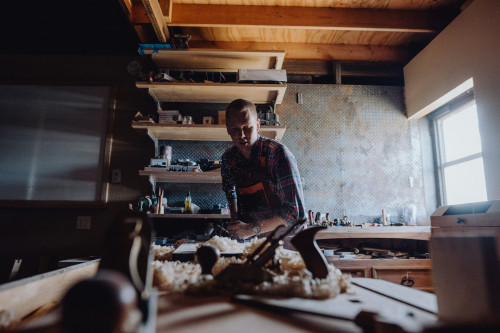
- Heavier work (e.g., woodworking, repairs): 500–800 lumens per square meter (45–75 lumens per square foot).
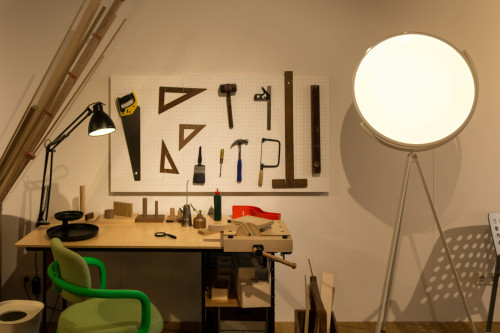
It’s often best to combine overhead lighting with focused task lighting. A good ceiling fixture provides even illumination throughout the room, while an adjustable desk lamp gives you extra light exactly where you need it.
Color Temperature – From Warm to Cool Light
Color temperature is measured in kelvin (K) and describes how “warm” or “cool” the light appears. Lower numbers mean warmer, more yellow light; higher numbers mean cooler, more bluish light.
- 2700–3000 K (warm white): Creates a cozy, relaxed atmosphere. Great for living spaces, but often too yellow for precision work.
- 3500–4500 K (neutral white): A balanced light that’s comfortable yet clear. Ideal for most hobby rooms where you want both comfort and clarity.
- 5000–6500 K (daylight white): Closest to natural daylight and best for accurate color rendering. Perfect for painting, drawing, or any color-sensitive work.
If color accuracy is important, look for lamps with a high Color Rendering Index (CRI)—preferably 90 or above. This ensures that colors appear true to life, similar to how they look in natural daylight.
Avoid Shadows and Glare
Even the best light can cause problems if it’s positioned poorly. Make sure light comes from multiple directions to minimize harsh shadows. If you’re right-handed, position your task light on the left side to avoid casting shadows over your work—and vice versa if you’re left-handed.
Matte surfaces on your worktable and walls can help reduce glare. You can also use lamps with diffusers or shades that spread light evenly.
LED – The Flexible Choice
LED lighting is the go-to option for hobby spaces today. It’s energy-efficient, produces very little heat, and comes in a wide range of brightness levels and color temperatures. Many modern LED fixtures even allow you to adjust both brightness and color temperature, so you can tailor the light to your task and time of day.
A good tip is to choose lamps with a dimmer function, so you can turn up the brightness for detailed work and lower it when you want a softer, more relaxed atmosphere.
Læs også:


Create a Comfortable Overall Lighting Environment
While task lighting is essential, the overall lighting in the room also matters. A balanced background light reduces the contrast between your work area and the rest of the room, helping to prevent eye fatigue. Combine focused lighting with indirect light—such as wall sconces or LED strips along shelves—for a more comfortable environment.
If your hobby room has windows, make the most of natural daylight. Position your workspace near the window, but avoid direct sunlight that can cause glare or alter color perception.
Make Lighting Part of Your Design
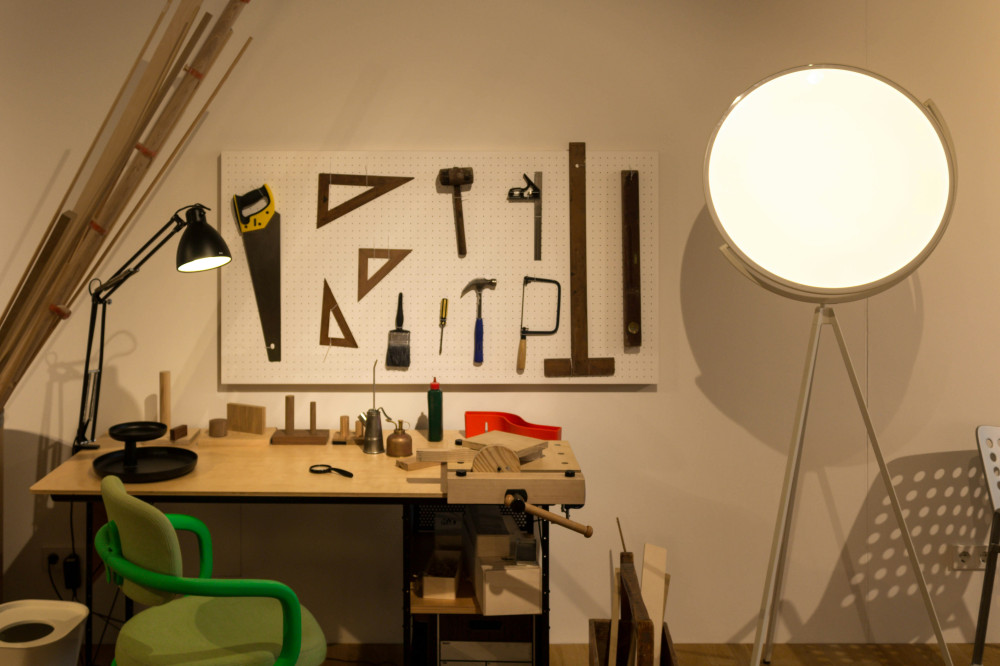
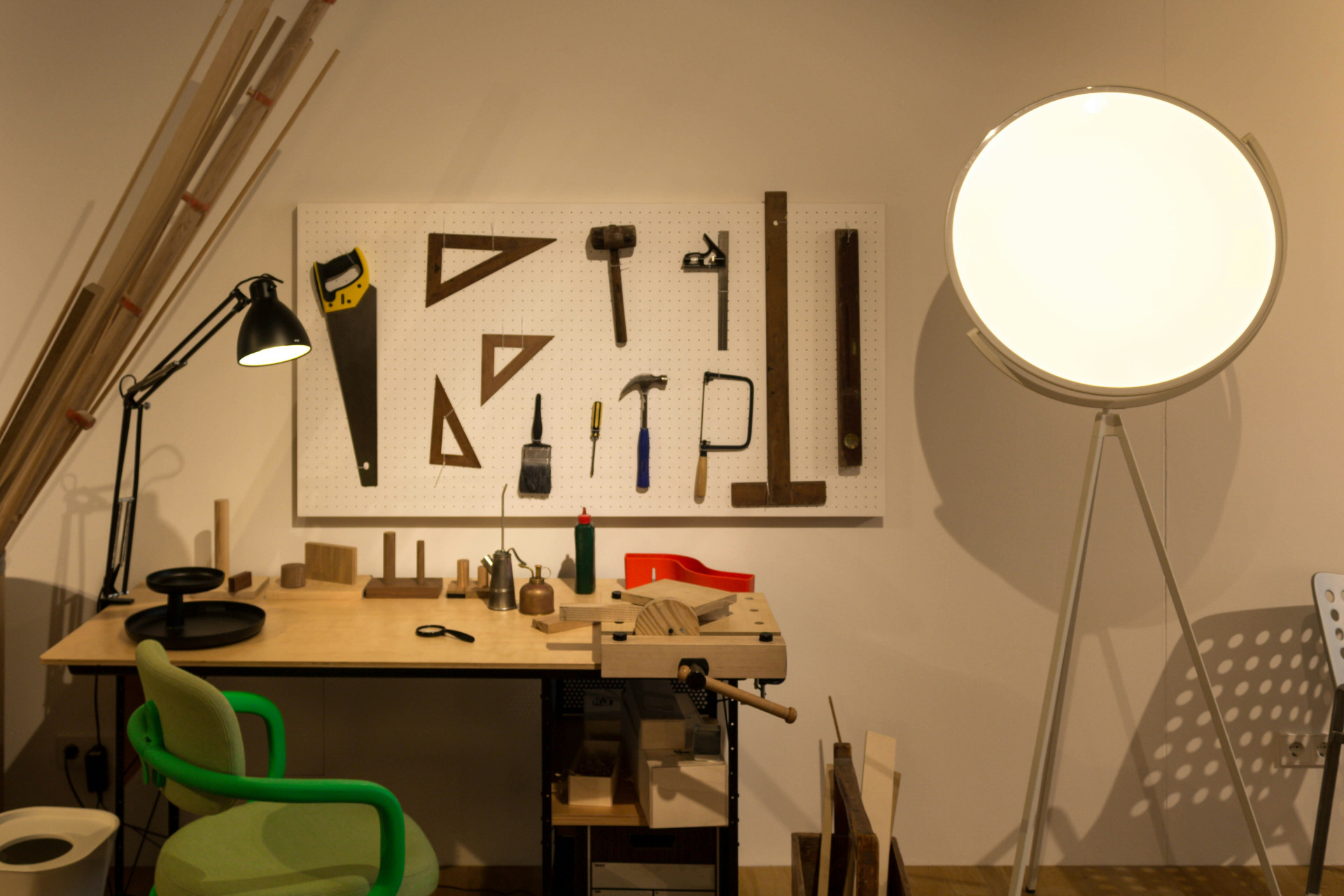
Lighting isn’t just functional—it can also enhance the look and feel of your space. A sleek architect lamp, a flexible LED arm, or an industrial-style ceiling fixture can add personality to your hobby room. Think about how your lighting choices fit your style and the materials you work with.
A well-lit hobby space is a place where you’ll want to spend time—and where your creativity can truly shine.
Læs også: