Test Before You Clean: How to Avoid Damaging Your Sofa

Test Before You Clean: How to Avoid Damaging Your Sofa
Your sofa is more than just a piece of furniture—it’s where you unwind after a long day, binge your favorite shows, or host friends and family. But over time, it collects dust, stains, and everyday wear. When it’s time to clean, one wrong move can lead to discoloration, shrinkage, or even permanent damage. The key to avoiding these mishaps? Always test before you clean. Here’s how to protect your sofa and keep it looking great for years to come.
Know Your Material
Before you grab the nearest cleaning product, take a moment to identify what your sofa is made of. Different materials require different care methods.
- Fabric sofas usually tolerate mild soap and water, but natural fibers like cotton or linen can shrink or fade.
- Leather sofas need specialized cleaners and conditioners to prevent drying and cracking.
- Microfiber is durable but can develop water spots if you use too much liquid.
- Velvet or chenille require extra care, as their fibers can flatten or lose their sheen.
Check the manufacturer’s care tag—often found under a cushion or on the underside of the sofa. In the U.S., you’ll often see cleaning codes like W, S, WS, or X, which tell you what’s safe to use:
- W: Water-based cleaners are safe.
- S: Use solvent-based cleaners only.
- WS: Either water- or solvent-based cleaners are fine.
- X: Vacuum or brush only—no liquids.
Always Test in a Hidden Spot
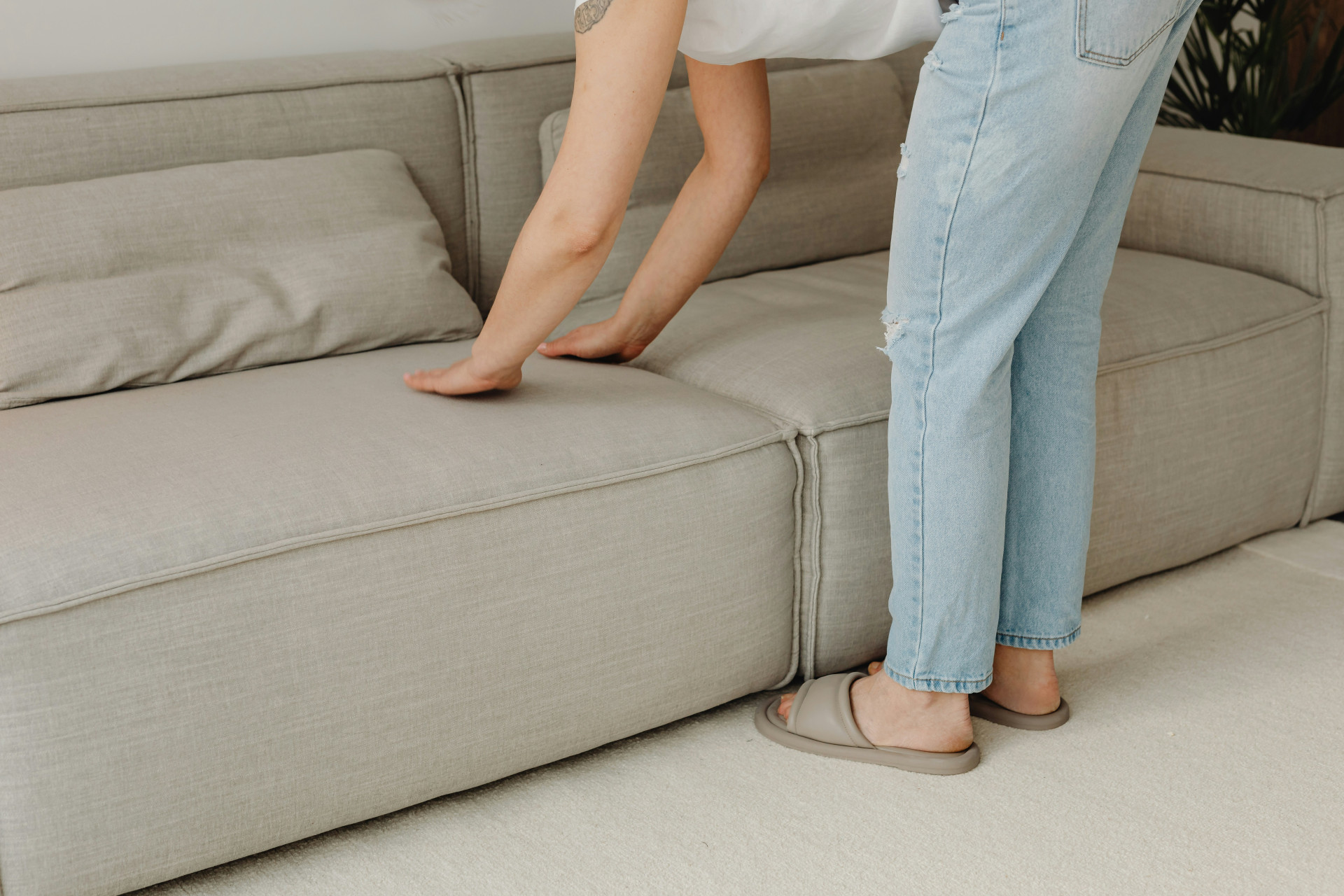
The most important step before cleaning is to test your product on a discreet area—like the back of the sofa or under a cushion. This small test can save you from a big mistake.
Here’s how:
- Apply a small amount of the cleaner to a cotton swab or soft cloth.
- Dab gently on the hidden area—don’t rub.
- Let it dry completely and check for changes in color, texture, or stiffness.
If you notice fading, discoloration, or roughness, don’t use that cleaner on the rest of the sofa. Try a gentler option or consult a professional upholstery cleaner.
Avoid Common Mistakes
Even with the best intentions, it’s easy to make cleaning errors that cause damage. Here are some pitfalls to avoid:
- Too much water: Excess moisture can soak into the padding, leading to mold or unpleasant odors.
- Scrubbing too hard: This can wear down fibers and leave visible marks.
- Using all-purpose cleaners: Many contain solvents or bleach that can ruin upholstery.
- Applying heat: Never use a hair dryer or heat gun to speed up drying—heat can shrink or warp fabric.
Instead, use a lightly dampened cloth and work in small sections. This gives you more control and reduces the risk of water stains.
Læs også:


DIY Cleaners—Use with Caution
Homemade cleaning solutions can be effective, but they’re not one-size-fits-all. A mix of mild dish soap and water can work for many fabric sofas, while a diluted vinegar solution can help neutralize odors. However, even natural ingredients can be too harsh if used incorrectly.
Always test first, use minimal liquid, and blot rather than scrub. Follow up with a clean, damp cloth to remove any residue.
When to Call a Professional
If your sofa has large stains, delicate fabric, or you’re unsure about the material, it’s worth calling a professional upholstery cleaner. Many U.S. cleaning services use specialized equipment and gentle, fabric-safe products that remove dirt without damaging the fibers.
While it may seem like an extra expense, professional cleaning can extend your sofa’s lifespan and restore its original look.
Prevent Damage Before It Happens
The best way to protect your sofa is through regular maintenance. Vacuum weekly using a soft brush attachment to remove dust and crumbs. Rotate and flip cushions to distribute wear evenly. Consider using a washable slipcover or a fabric protector spray to guard against spills.
And remember—quick action matters. Blot spills immediately with a clean cloth to prevent stains from setting.
A Sofa That Lasts
Testing before you clean isn’t just about avoiding damage—it’s about caring for one of the most used and loved pieces in your home. With a little patience and the right approach, you can keep your sofa looking fresh, comfortable, and inviting for years to come.
So next time you spot a stain, take a deep breath, grab a cloth, and test first. A few extra minutes can save you from a costly mistake.
Læs også: